Every agency talks about account rounding. Fewer have a reliable, repeatable way to find coverage gaps and act on them at scale. Gap analysis and cross-sell aren’t just sales tactics—they’re the operational backbone of a resilient, profitable book.
If you’re feeling the squeeze—hard market scrutiny, flat new-business pipelines, price-sensitive insureds—your best growth lever is sitting in your book already. A disciplined approach to identifying coverage gaps and executing precise, timely cross-sell can lift retention 2–5 points and add 15–30% revenue per account without hiring a new producer.
This guide walks through the workflows, data, and tools independent agents can use to perform gap analysis well—without becoming a data scientist or creating chaos for your service team. You’ll get concrete checklists, scripts, and metrics, plus examples that translate directly to your AMS and carrier mix.
What “gap analysis” really means in an agency
Gap analysis is the structured process of comparing an insured’s current coverage against a target risk profile for their exposures. It’s not a hunch or a hastily assembled renewal email—it’s an explicit, documented comparison built from primary sources (policies, apps, schedules) and matched to industry baselines.
Key elements:
- Source of truth: Your starting point is the policy on file—dec pages and forms, not just AMS summary fields. In practice, this means reading PDFs from downloads, client portals, or email.
- Target profile: Benchmarks for coverage, limits, and endorsements by line and class code. Example: a 35-employee professional services firm should have GL at $1M/$2M, Cyber with at least $250k incident response, EPLI at $1M with 3rd-party coverage, and a $2–$5M umbrella subject to carrier appetite.
- Evidence: Document what you found and what you recommended. If you suggest Flood and the insured declines, that’s a protected E&O position—if you never documented the offer, it is not.
The operational test: If a producer is out, can a new account manager open the file and see (a) what’s covered now, (b) what’s missing relative to the target, and (c) what was offered and declined? If not, your gap analysis isn’t yet a process.
Why cross-sell is the highest-ROI growth lever
Cross-sell is where profitable agencies compound advantages:
- Higher retention: Multi-line households and rounded commercial accounts retain at 88–92% vs. 78–84% for monoline. Each additional line can add 3–5 retention points.
- Lower acquisition cost: A $600 EPLI add-on to an existing BOP may cost one-tenth the producer time of net-new business.
- Revenue density: A $9,000 CL account rounded to $12,000 with Cyber and Umbrella at a 12% average commission yields an extra $360/year in commission—every year—per account. Across 300 similar accounts, that’s ~$108,000 incremental commission.
- Risk control: Filling gaps reduces uncovered losses and renewal friction. Carriers appreciate accounts with right-sized limits and appropriate endorsements.
When markets harden, rounded accounts are less likely to shop, and if they do, they’re harder to steal. Cross-sell is a retention strategy disguised as sales.
The data you actually need (and where to find it)
A good gap analysis stands on accurate, current data. Here’s the minimum viable set and common sources in a typical independent agency stack.
- Policies and endorsements (PDFs)
- Sources: Carrier downloads in Applied Epic or AMS360; email PDFs; client portals; carrier portals (Travelers, The Hartford, Chubb, Liberty Mutual, Nationwide, Progressive, Auto-Owners, CNA, etc.).
- Fields to extract: Named insured, effective dates, limits, deductibles, key forms (e.g., CG 20 10, Cyber sublimits), scheduled property/vehicles, locations, class codes.
- Account profile
- AMS account data: Employees, revenue, operations notes; lines in force; expiring dates. Systems: Applied Epic, Vertafore AMS360, QQCatalyst, HawkSoft, NowCerts, EZLynx.
- 3rd-party data: Secretary of State, NAICS, website, LinkedIn headcount (for EPLI/Benefits triggers), MVR claims for Personal Auto.
- Certificates and contracts
- COIs can signal missing endorsements (e.g., primary/noncontributory, waiver of subrogation). Customer contracts may require Cyber, Tech E&O, or higher GL aggregates.
- Loss runs and audits
- WC audits and GL loss runs reveal exposures and operational changes that didn’t make it into the last renewal.
Practical tip: Policy PDFs are often the most accurate single source. If AMS fields don’t match the PDF, the PDF wins. Many agencies now rely on an AI layer to read PDFs and normalize coverage data so producers and CSRs aren’t manually keying forms.
A repeatable workflow for gap analysis and cross-sell
Use this 10-step checklist to make gap analysis part of your weekly operating rhythm, not a one-off.
- Inventory lines in force
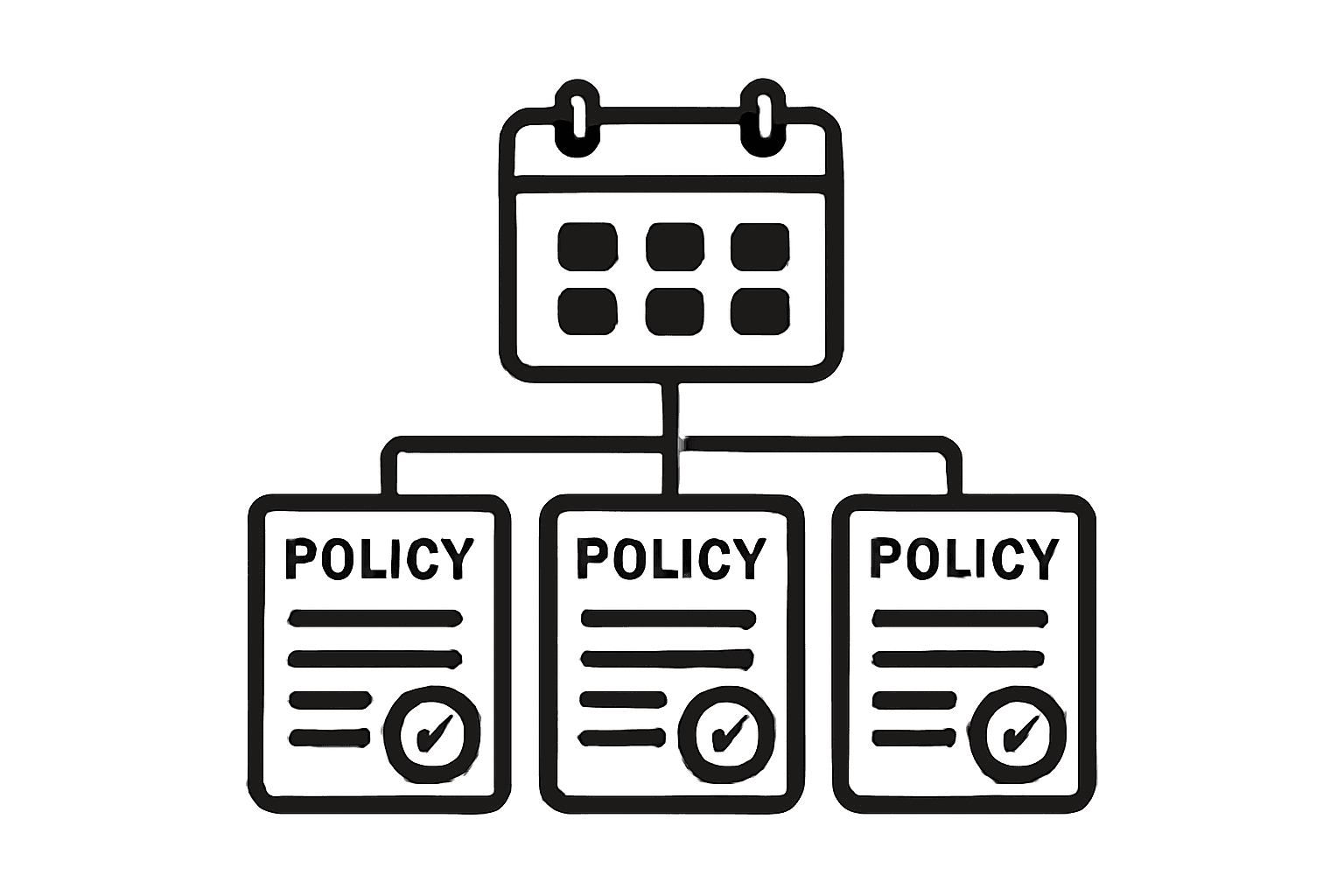
- Pull a 120-day renewal report from your AMS (e.g., Applied Epic Book of Business > Policies Expiring). Include line, carrier, premium, effective date.
- Gather current policies and endorsements
- Ensure you have full dec pages and key endorsements in the document management system. Fill gaps via carrier portals or insured request.
- Normalize coverage data
- Extract core fields (limits, deductibles, forms) into a consistent template by line. Tools like Surabase can read PDFs and map coverages account-by-account.
- Define target baselines
- Maintain playbooks by segment: e.g., Contractors under $10M revenue vs. Professional Services vs. Retail. Specify must-have coverages and typical limits.
- Compare and flag gaps
- Run a simple rule set: “If GL exists but no Umbrella and annual revenue > $3M, flag.” “If BOP location has basement and HO ZIP in flood zone, flag Flood.”
- Prioritize by impact and timing
- Score opportunities by premium estimate, retention lift, and renewal window. Hit expiring lines first. Avoid off-renewal changes that create minimum earned premium issues unless risk is urgent.
- Prepare offers with options
- Package good/better/best limits with real dollars. “Cyber: $250k at $650, $500k at $925, $1M at $1,550. Includes incident response, breach coach, social engineering.”
- Document recommendations
- Record recommendations and declinations in AMS activities. Upload a one-page Gap Review Summary to the client file.
- Execute outreach
- Send a Renewal Coverage Review email with calendar link. Use a 15–20 minute agenda. For small PL accounts, script a concise phone call.
- Close the loop
- Bind or document decline. Add follow-up tasks post-renewal for declined but material coverages. Update baselines if the client’s operations changed.
Common coverage gaps you can find today
Your book likely has dozens of accounts with the same, repeatable gaps. Standardize how you find and solve these.
Commercial lines hot spots
- Umbrella/Excess shortfalls
- Example: Contractor with GL $1M/$2M, Auto $1M CSL, WC only, no Umbrella. Target: $2–$5M Umbrella. Premium: $1,800–$6,000 depending on class and fleet. Trigger: revenue > $3M, contracts requiring higher limits.
- Cyber liability
- Example: CPA firm with $6M revenue, 25 employees, no Cyber. Target: $500k–$1M with social engineering and dependent business interruption. Premium: $900–$2,500. Trigger: handles PII/PHI, uses MS 365, QuickBooks Online.
- EPLI missing or too low
- Example: Restaurant with 60 employees, no EPLI. Target: $1M with 3rd-party coverage. Premium: $2,000–$5,000. Trigger: 15+ employees, customer-facing, prior HR incidents.
- Hired/Non-Owned Auto (HNOA)
- Example: Retailer with delivery via DoorDash-style drivers, no HNOA. Target: add HNOA to GL or BAP. Premium: $250–$900. Trigger: employees use personal vehicles.
- Inland Marine/Equipment Floater
- Example: HVAC contractor schedules no tools, $150k in equipment. Target: $2,500 deductible, RCV. Premium: $1,000–$3,500. Trigger: equipment on vehicles, jobsites.
- Professional/Tech E&O
- Example: IT MSP on BOP + GL only. Target: Tech E&O $1M with cyber package. Premium: $2,000–$6,000. Trigger: contractual indemnities; advice/services exposure.
- Builders Risk/Installation Floater
- Example: Contractor with project-specific exposure not addressed by BOP/IM. Premium varies by project value. Trigger: signed contracts for new builds or major renos.
- Property valuation and coinsurance
- Example: Manufacturer with $8M TIV insured at $5M, 80% coinsurance. Trigger: inflation, equipment purchases. Solution: updated BPP schedule, agreed value endorsement.
Personal lines hot spots
- Personal Umbrella
- Example: Household with HO and 2 autos, teen driver, no PUP. Target: $1–$2M umbrella. Premium: $250–$500. Trigger: net worth > $500k, youthful operators.
- Flood (NFIP or private)
- Example: Home outside mandatory flood zone, no Flood. Target: Preferred risk NFIP ~$500–$700. Trigger: basement, nearby water, prior surface water issues.
- Water backup/service line
- Example: HO-3 without water backup endorsement. Target: $10k–$25k limit. Premium: $50–$150. Trigger: older homes, finished basements.
- Scheduled jewelry/fine arts
- Example: $25k engagement ring not scheduled. Premium: ~$3–$6 per $100 of value. Trigger: homeowners application, recent life events.
- Cyber/home equipment breakdown
- Example: Smart-home heavy household, no cyber or equipment breakdown. Premium: $50–$150. Trigger: WFH, high device count.
Create quick-reference guides in your AMS so CSRs can spot these in under 60 seconds during any client touch.
Timing and triggers: When to act
Gap analysis is more likely to lead to closed cross-sell when your timing aligns with client events and administrative windows.
- Renewal windows
- 120–90 days: Commercial remarket screening and exposure updates.
- 60–30 days: Present options and bind. Cross-sell naturally pairs with renewal review.
- Midterm triggers
- Endorsements: Adding a location or vehicle is a natural moment to discuss Umbrella, HNOA, or IM.
- Certificates: COI requests with special wording reveal contractual requirements. Offer endorsements or higher limits now.
- Claims: After a water damage loss, propose water backup and equipment breakdown with context.
- Headcount/revenue jumps: WC audit variances >15% or LinkedIn headcount growth trigger EPLI and benefit updates.
- Life events (PL)
- Teen license dates, home closings, jewelry purchases, job changes, and business start-ups all warrant a quick cross-sell review.
Align internal SLAs so producers see these triggers in their queue. For example, create an AMS activity rule: “If COI request includes primary and noncontributory, task producer to review Umbrella and additional insured endorsements within 24 hours.”
Packaging and presenting: What to say and send
Your recommendations are more likely to be accepted if they’re simple, priced, and positioned as risk management—not pressure.
- Use priced options
- Provide good/better/best with premiums and key features; avoid jargon. Example email block: “EPLI adds defense for discrimination and harassment claims. Options: $500k at $1,750; $1M at $2,350 (adds 3rd-party); $2M at $3,900.”
- Tie to concrete exposures
- “Your lease requires $2M aggregate and primary/noncontributory—your current GL is $1M/$2M with no PNC. Here are two ways to fix that.”
- Use brief visuals
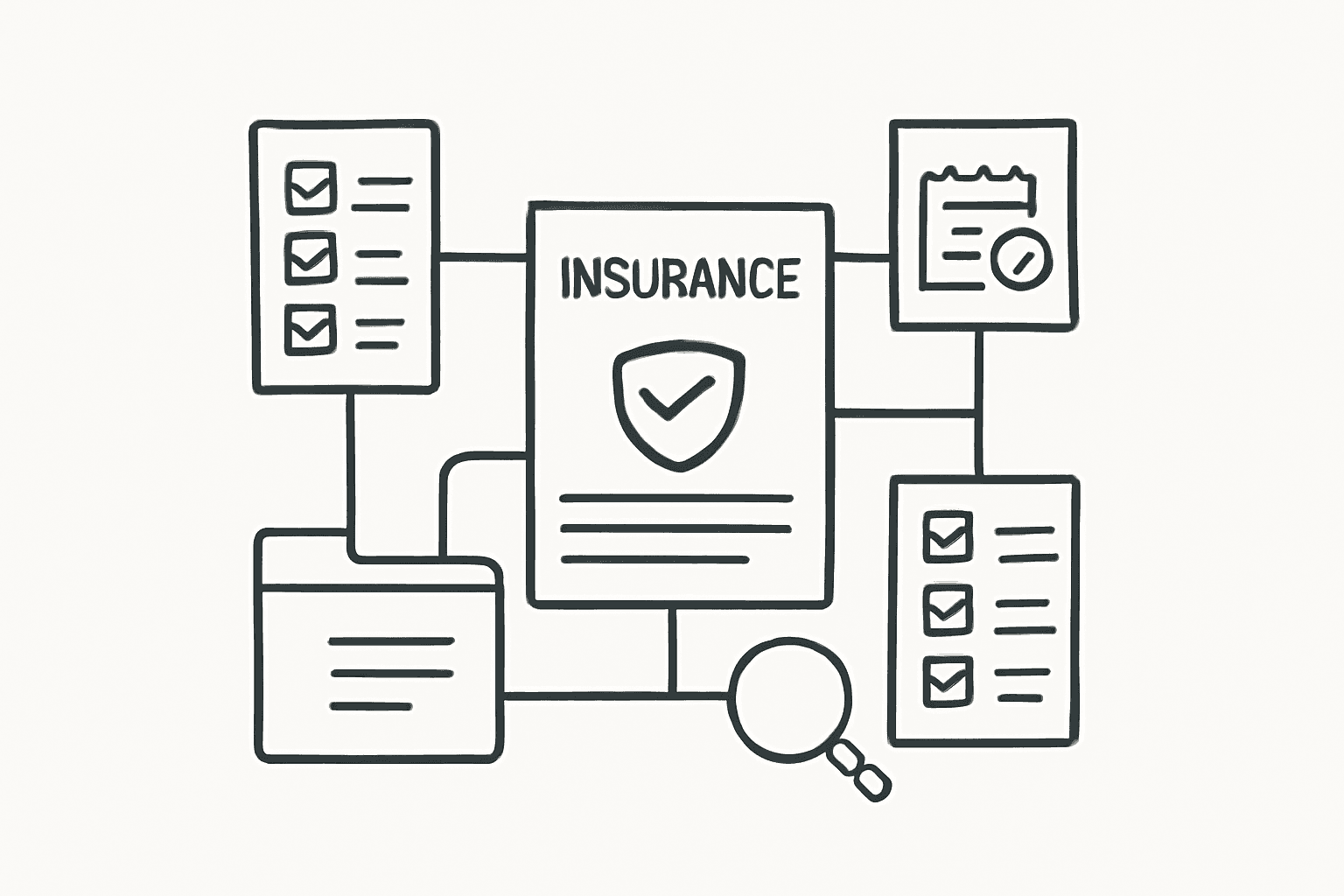
- A 1-page Gap Review Summary listing Covered, Missing, Recommended, with checkboxes. Keep the AMS note concise but complete.
- Make it easy to bind
- Include bind instructions and EFT/credit card links where allowed. For admitted carriers like Travelers or The Hartford, outline effective date and MEP implications.
Handling common objections
- “Let’s revisit at renewal.”
- “Understood. The contract with Acme starts next month; they require $5M limits. We can do a short-term Umbrella to align with renewal, or set the effective date for day one of the contract.”
- “Budget is tight.”
- “We can start with $500k Cyber at $925 and revisit $1M next year. The average ransomware breach among firms your size is $180k. The $925 covers incident response and legal.”
- “We’ve never had a claim.”
- “That’s ideal. We’d like to keep it that way. The biggest claims we see now are social engineering and EPLI. Here are three local examples from the last 12 months.”
Measuring impact: KPIs and sample math
Track a small set of metrics monthly so the team sees progress and you can tune the process.
- Rounding ratio
- Average lines per account by segment (goal: CL 3.2+, PL 2.1+).
- Cross-sell hit rate
- Bound cross-sell policies divided by proposals sent (goal: 25–40% by line; Cyber/EPLI often 20–30%).
- Coverage gap closure rate
- Open gaps vs. closed (bound or declined with doc) within 90 days of identification.
- Revenue per account
- Commission per account pre/post program.
- Retention delta
- Retention for rounded vs. monoline households and accounts (expect 3–8 point spread).
Example: A 6,000-policy personal lines book averages 1.7 lines/household and 84% retention. You implement a gap analysis program and move 1,000 households to add an umbrella ($325 avg premium at 12% commission = $39 commission per policy, $39,000 annually) and water backup ($80 at 12% = $9.60; 800 adds = $7,680). Retention lifts to 87%, preserving ~180 policies that would have churned (at $1,400 premium avg and 12% commission = ~$30,240 preserved). Combined, you add ~$76,920 in annual commission plus the multi-year retention benefit.
Tools and approaches: What actually works at scale
Below is a practical comparison of common approaches agencies use to find gaps and cross-sell.
| Approach | Pros | Cons | Best for |
|---|---|---|---|
| Manual spreadsheet audits | Cheap, customizable; immediate start | Labor-intensive; error-prone; hard to keep current | Small books, pilot projects |
| AMS reports and checklists (Epic, AMS360, HawkSoft) | Centralized; activity tracking; renewal lists | Coverage detail often incomplete; limited PDF parsing; inconsistent data entry | Mid-size agencies with disciplined workflows |
| Carrier portal reviews | Accurate for that carrier; endorsements visible | Fragmented across carriers; doesn’t show missing lines; no cross-carrier view | Line-specific checks (e.g., BOP with The Hartford) |
| AI layer reading policy PDFs (e.g., Surabase) | Normalizes coverage across carriers; links to source docs; scales across book; renewal/gap tracking | Requires initial setup, data governance; still need human QA | Agencies seeking consistent, book-wide gap analysis |
Whatever stack you choose, the core requirement is the same: use the policy itself as the source of truth and keep a documented recommendation trail.
E&O, documentation, and governance
A good cross-sell program protects you as much as it grows revenue—if you document correctly.
- Record offers and declines
- Create an AMS activity type “Coverage Recommendation.” Include date, coverage, limits quoted, premium, client response. Attach the Proposal PDF.
- Avoid implied expertise you can’t support
- Stick to carrier forms and admitted/surplus lines market comparisons. For specialized risks (e.g., pollution, D&O), disclose when you’re obtaining expert quotes.
- Manage MEPs and cancellations carefully
- Flag minimum earned premium and short-rate penalties before midterm changes. Note the impact in your proposal.
- Keep baselines updated
- Annual review of your target profiles with underwriting feedback (e.g., cyber controls tightening: MFA, backups, EDR now mandatory for $1M limits with Chubb/Travelers/CNA).
- Privacy and data handling
- If using AI to read PDFs, ensure data is processed within your compliance boundaries and access is role-based.
If a coverage is material to the client’s exposure, always make and document the offer—even if you think they’ll decline. It’s both good service and E&O best practice.
Putting it together in your stack
Here’s how a typical independent agency can run this with commonly used systems.
- Applied Epic shop
- Run expiring policy reports at 120 days; attach Surabase or similar AI output to the Opportunity record. Use Activity codes for “Gap Identified,” “Proposal Sent,” “Bound,” “Declined.” Dashboards show gap closure by producer.
- AMS360 shop
- Use Book of Business and Expiration Reports; standardize form names in the Attachments tab. Create Custom Forms to summarize gaps. Push tasks via WorkSmart or ImageRight if in use.
- QQCatalyst/HawkSoft/NowCerts
- Leverage policy download to fill base fields. Store dec pages centrally with standardized naming. Use Pipelines or Workflows to assign cross-sell tasks.
- Carrier access
- Pre-load quick-quote options: e.g., Travelers Cyber First, The Hartford ADP, Chubb Cyber, Liberty Mutual Umbrella. Know which carriers allow easy endorsements midterm.
- AI document layer
- Connect your policy document repository. The tool reads PDFs, normalizes coverages, and flags missing lines against your baselines. Surabase does this while organizing policies by client and tracking renewals and gaps across your entire book.
Define ownership: producers own recommendations; CSRs own document collection; a central ops lead owns baselines and QA.
Scripts, templates, and one-pagers you can steal
- Renewal Coverage Review email (commercial)
- Subject: Quick coverage review before we finalize your renewal
- Body: “We’ve completed a coverage review of your expiring policies. Two items to consider based on your contracts and headcount growth: (1) EPLI at $1M including 3rd-party claims; (2) a $2M Umbrella to meet upcoming contract limits. Options and pricing attached. Do you have 15 minutes this week to pick what fits best?”
- PL phone script (umbrella + water backup)
- “I’m reviewing your home and auto renewal. Two quick items: water backup at $25k is $92/year and covers basement drain backups. A $1M umbrella is $310/year and adds protection beyond your auto limits. I recommend both. Do you want me to add them before we finalize?”
- Gap Review Summary (1 page)
- Sections: Covered Now, Missing/At-Risk, Recommendations (with price), Client Decision (bind/decline), Date/Initials. Attach to AMS and email.
Building baselines: Where to start and how to update
You don’t need perfect benchmarks on day one. Start with your top 5 classes or household profiles.
- Commercial baselines (example)
- Contractors < $10M revenue: GL $1M/$2M, Auto $1M CSL, WC statutory, IM $100k+ as needed, Umbrella $2–$5M, EPLI $1M for >20 employees, Cyber $500k+ with social engineering, HNOA if any driving.
- Professional services 10–100 employees: BOP/GL $1M/$2M, Property per TIV, Cyber $1M with business interruption, Tech E&O if applicable, EPLI $1M, Umbrella $2–$5M.
- Retail/hospitality: BOP/GL $1M/$2M, Food spoilage/equipment breakdown, EPLI $1M with 3rd-party, Cyber $500k+, HNOA, Umbrella $2–$5M.
- Personal baselines (example)
- Standard household: HO-3 with water backup $10k+, Auto with $250k/$500k BI or higher, PUP $1M+, Scheduled valuables as needed, Service line and equipment breakdown where available, Flood if any risk factors.
Review baselines quarterly with producers and underwriters. Note carrier appetite changes—e.g., social engineering coverage sublimits and MFA requirements have tightened meaningfully in the last 18 months.
A sample week running the program
- Monday: Ops lead publishes 90-day renewal list with gap flags. Producers pick top-10 accounts each.
- Tuesday–Wednesday: CSRs chase missing dec pages; AI layer updates coverage map; producers prepare option sheets.
- Thursday: 20-minute client calls; 5–10 cross-sell proposals sent per producer.
- Friday: Bind 2–3 adds, document declines, schedule follow-ups. Update dashboard.
At steady state, a 6-producer shop can send 40–60 targeted cross-sell proposals weekly and bind 10–20. That’s sustainable, meaningful lift without burning out service staff.
FAQ
How do we estimate pricing quickly without full applications?
Use carrier quick-quote tools and historical binds to build a pricing grid by segment. For Cyber and EPLI, capture a few must-have qualifiers (employee count, MFA/backup status, revenue, prior claims). Quote ranges are acceptable for initial conversations; follow with formal quotes once interest is confirmed.
What if our AMS data is messy or incomplete?
Start with policy PDFs as your truth and backfill AMS fields over time. Build a narrow set of required fields per line and enforce them at renewal. Consider an AI layer to extract and normalize coverages so your team isn’t keying data. Progress over perfection—focus on accounts renewing in the next 120 days first.
How do we avoid overwhelming clients with too many recommendations?
Limit proposals to two or three high-impact items tied to specific exposures or contract requirements. Present options with pricing and a one-sentence rationale. Keep a parking lot of secondary recommendations to revisit next renewal or after a triggering event.
What KPIs should producers own vs. service?
Producers should own cross-sell proposals sent, bind rate, and revenue per account. Service should own data completeness (dec pages on file), documentation (offers/declines), and SLA adherence on outreach. Leadership owns baseline definitions and overall retention lift.
Which lines usually close fastest for cross-sell?
In commercial, Umbrella (when contract-driven), HNOA, and low-limit Cyber can close within a week. In personal, water backup and PUPs are fast. EPLI and higher-limit Cyber often require more education but yield strong long-term retention.
How do we align compensation with account rounding?
Add cross-sell credit to producer comp (e.g., 15–20% new business commission on added lines in year one, then standard renewal rates). For service, use quarterly bonuses tied to gap closure rates and documentation quality targets.
The bottom line
Systematic gap analysis and targeted cross-sell turn a static book into a compounding asset. The ingredients are straightforward: current policy data, practical baselines, disciplined documentation, and consistent outreach tied to renewal and real-world triggers.
You don’t need to boil the ocean. Start with your next 120 days of renewals, define three must-have coverages per segment, and build a weekly cadence around proposals and follow-ups. Layer in tools that reduce manual parsing of dec pages and keep your recommendations consistent.
Whether you run Epic, AMS360, HawkSoft, QQCatalyst, or NowCerts, the agencies winning in this market are the ones treating gap analysis as an operating process, not an initiative. With a clear playbook, your team can protect clients better, retain more, and grow revenue per account—without adding headcount.